How to Draw Ruffles | Step-by-Step Beginner’s Guide
Index:
Introduction
Foundation: Learn ruffle construction and gathering ratio
Part 1: Try this simple 3-step-tutorial
Part 2: Practice drawing from different perspectives
Part 3: Understand ruffle drape and movement
Conclusion
Introduction
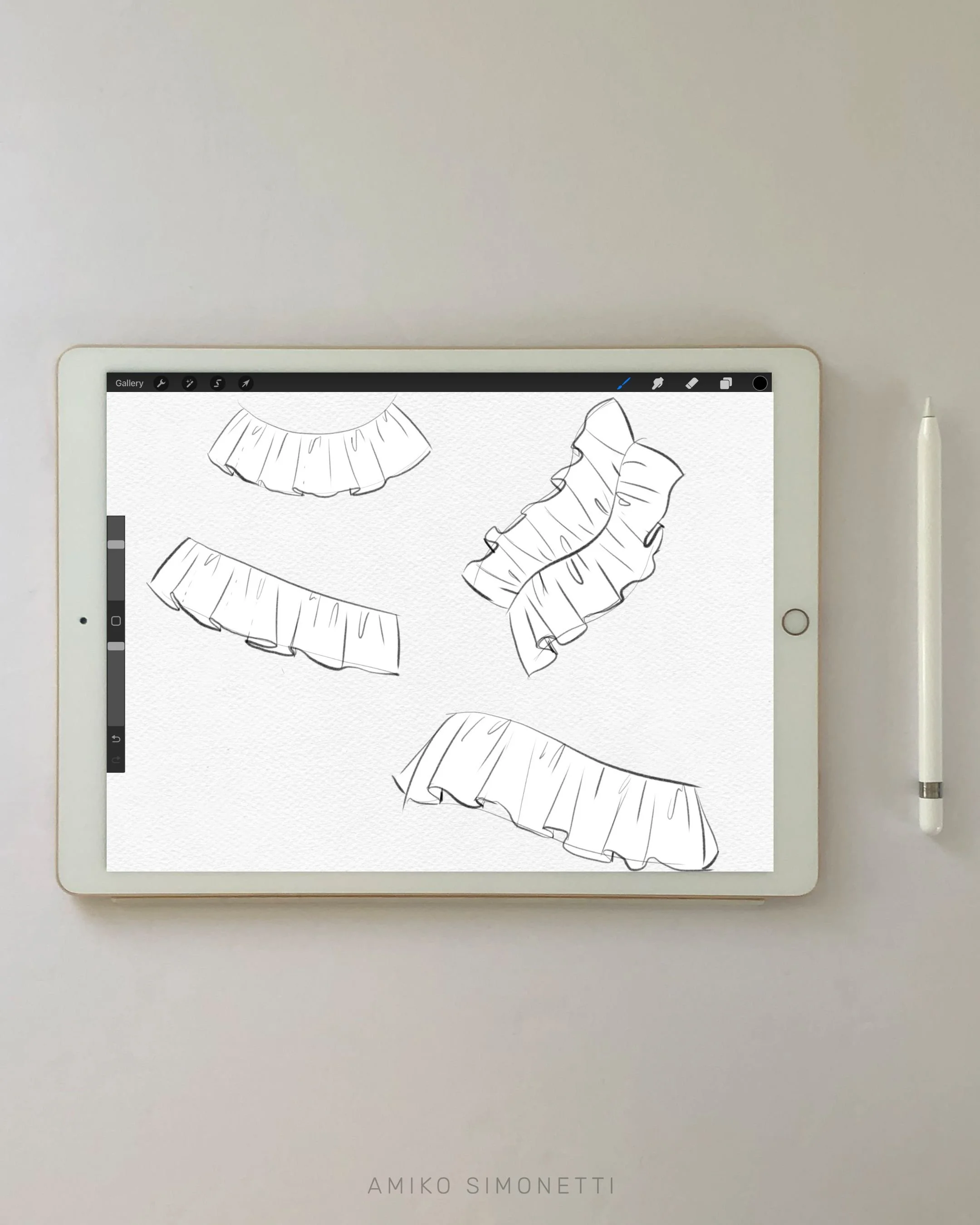
Ruffles look complicated, but they’re actually built from a few simple patterns.
If you can draw these shapes, you can draw ruffles.
In this post, you’ll learn how to break down ruffles into shapes, direction, and movement so they feel much easier to draw naturally, even if you’re a complete beginner.
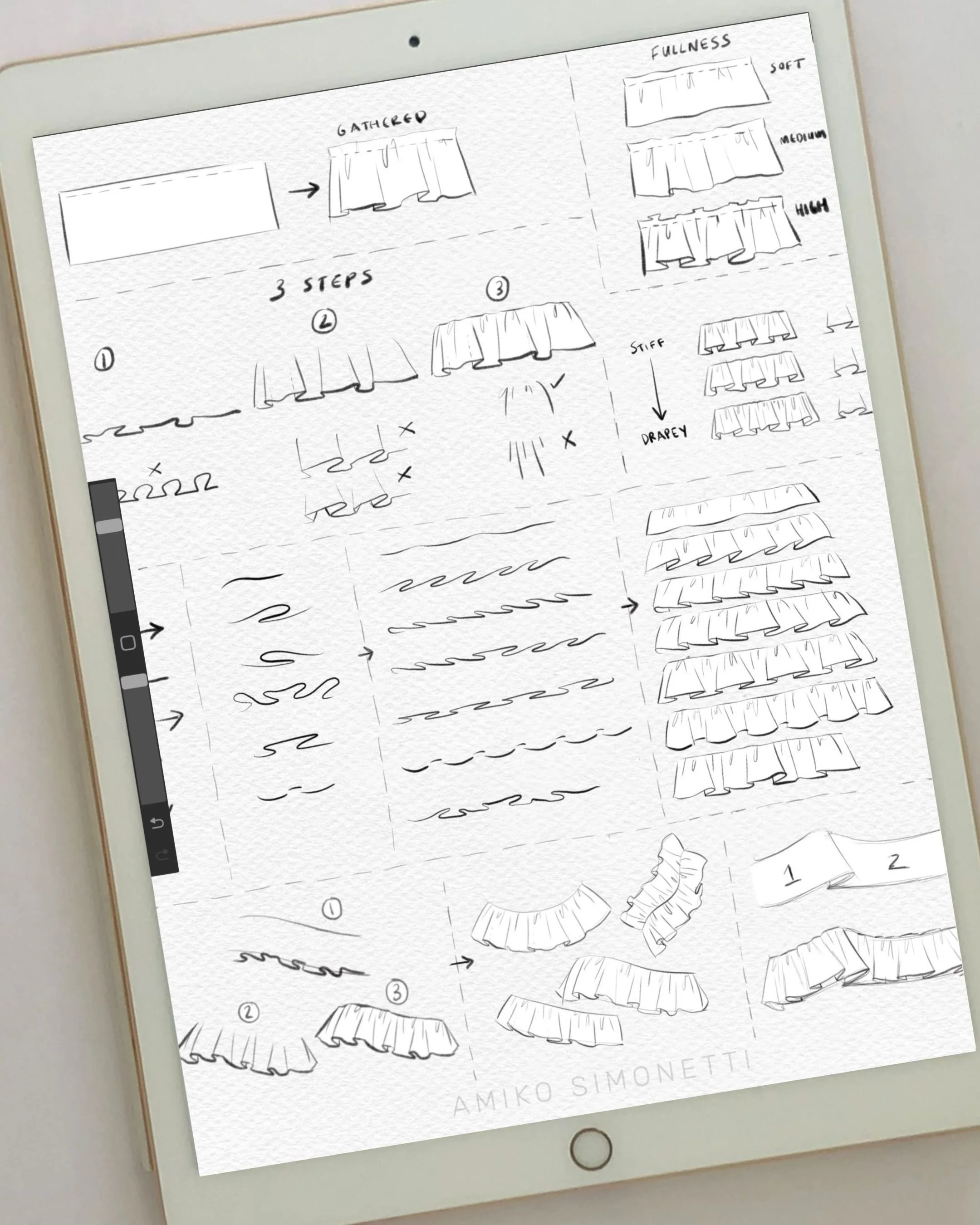
See the entire process in the following video, or follow the steps in this tutorial.
Foundation
What Is a Ruffle?
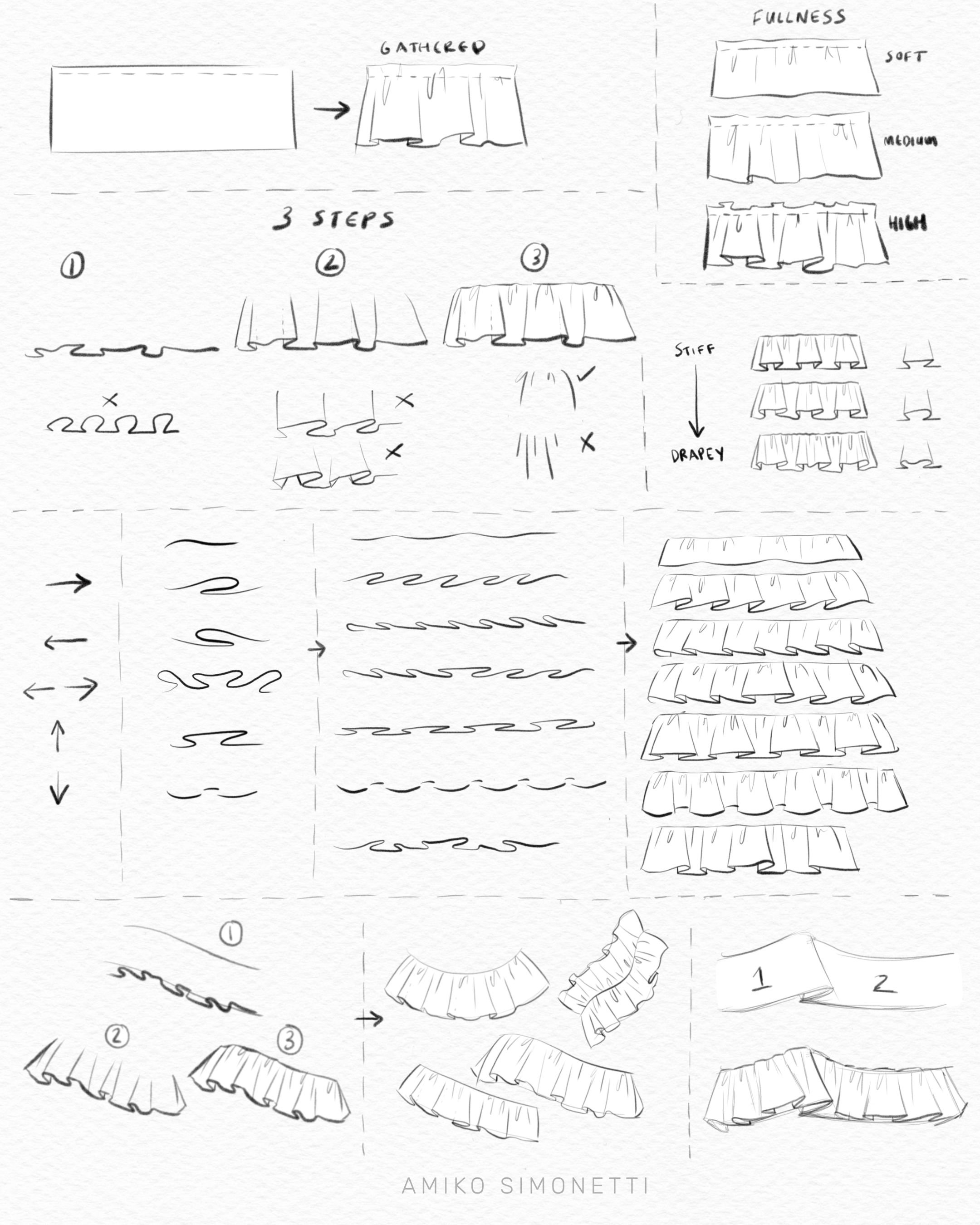
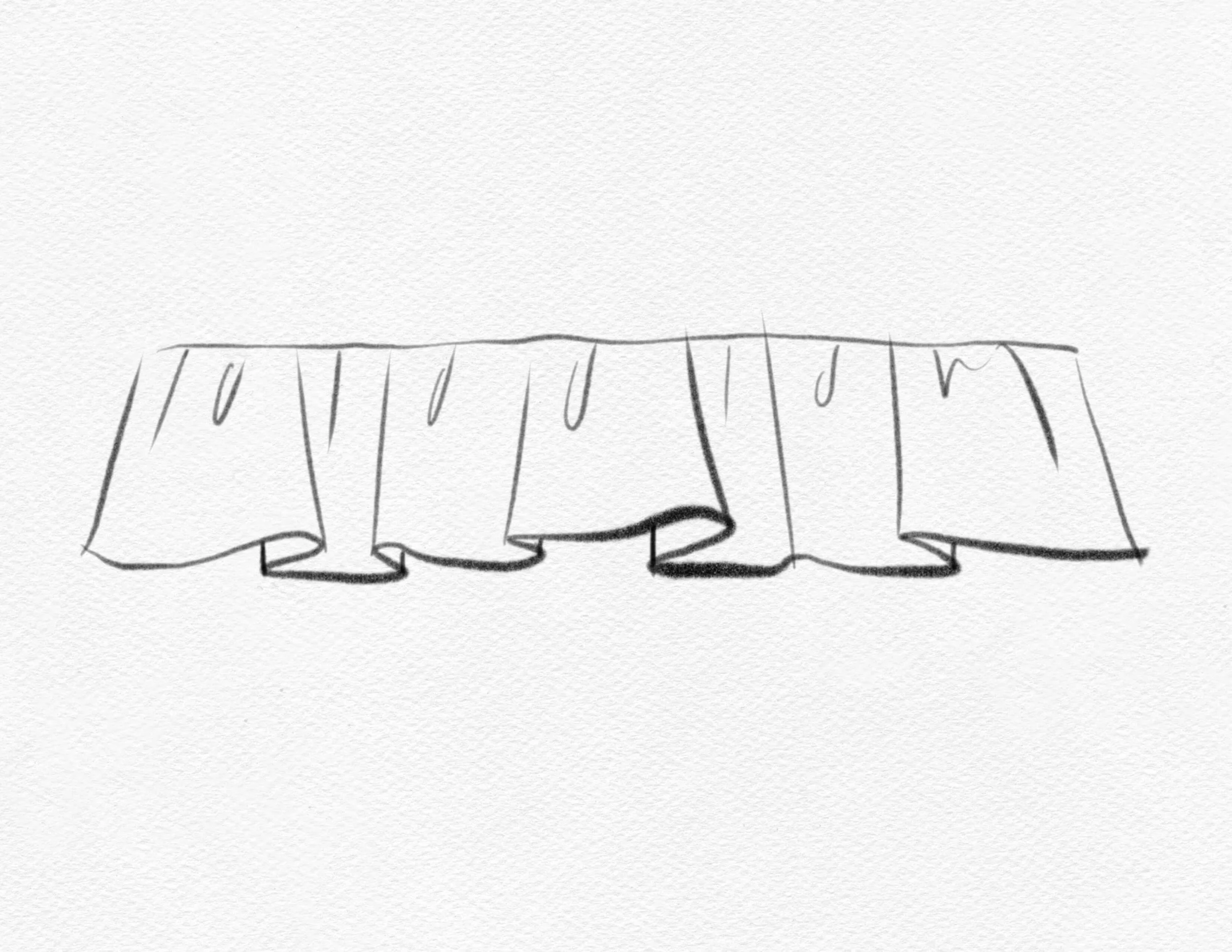
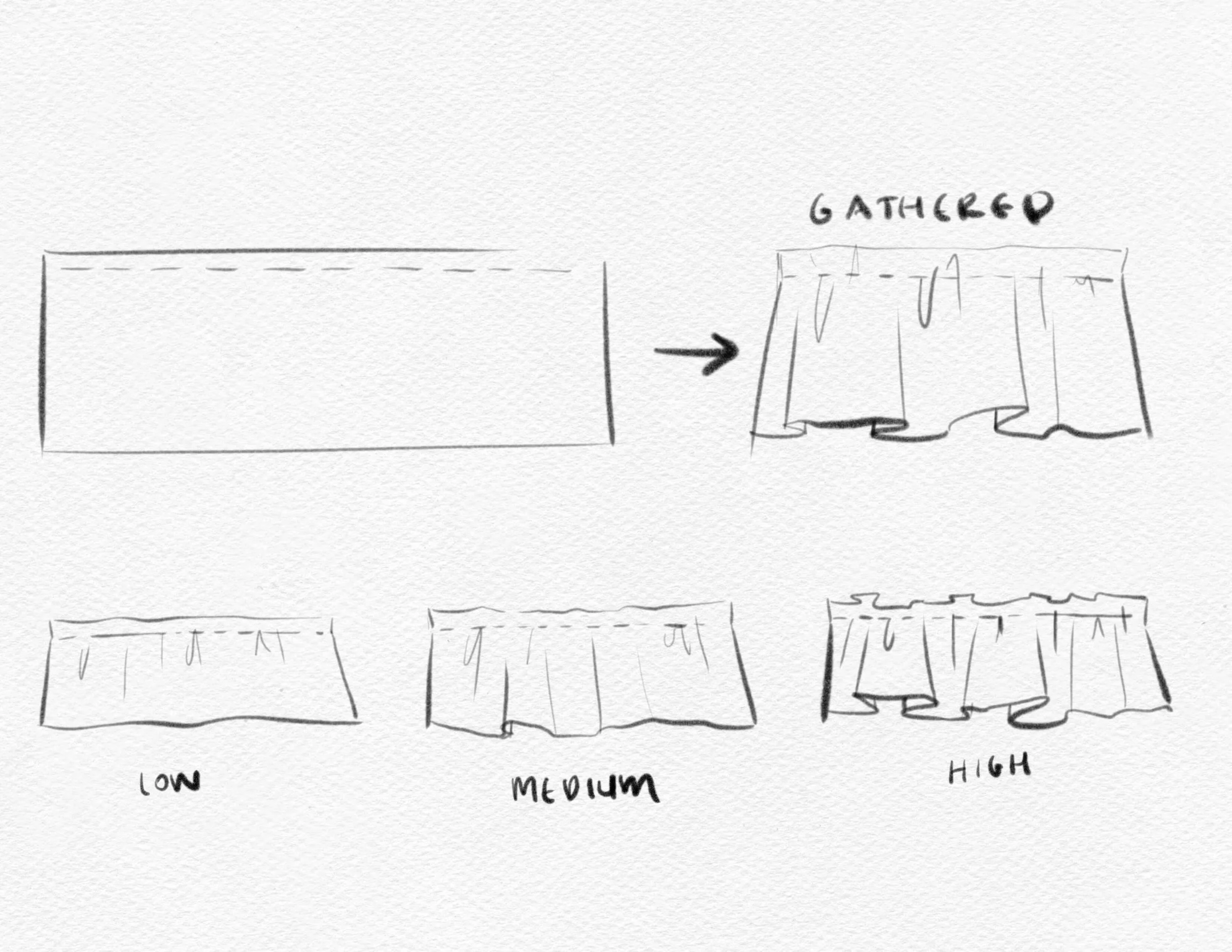
A ruffle is a rectangular strip of fabric that's gathered or compressed shorter on one edge, so the other edge flares out and forms ruffles.
Ruffles vary in fullness. Some ruffles are really soft. They’re soft because the gathering is subtle. The more gathering or compression, the fuller the ruffle.
In sewing, this is defined as the gathering ratio. Gathering ratio is the amount of fullness gathered or compressed compared to the actual length of the seam.
That’s more technical than we really need to know for this tutorial. All we need to remember is that a ruffle is gathered fabric, and the amount of fullness can vary.
Part 1- Tutorial
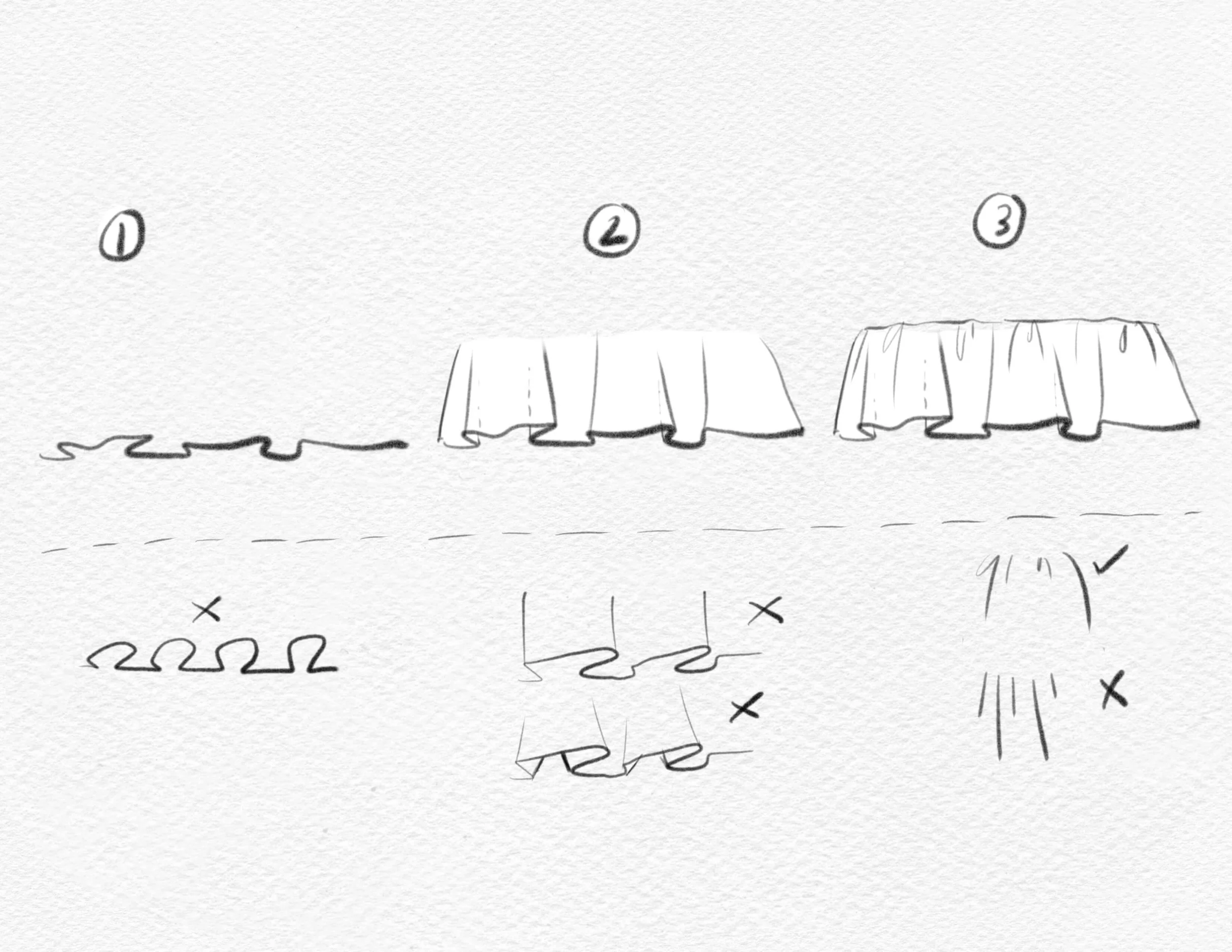
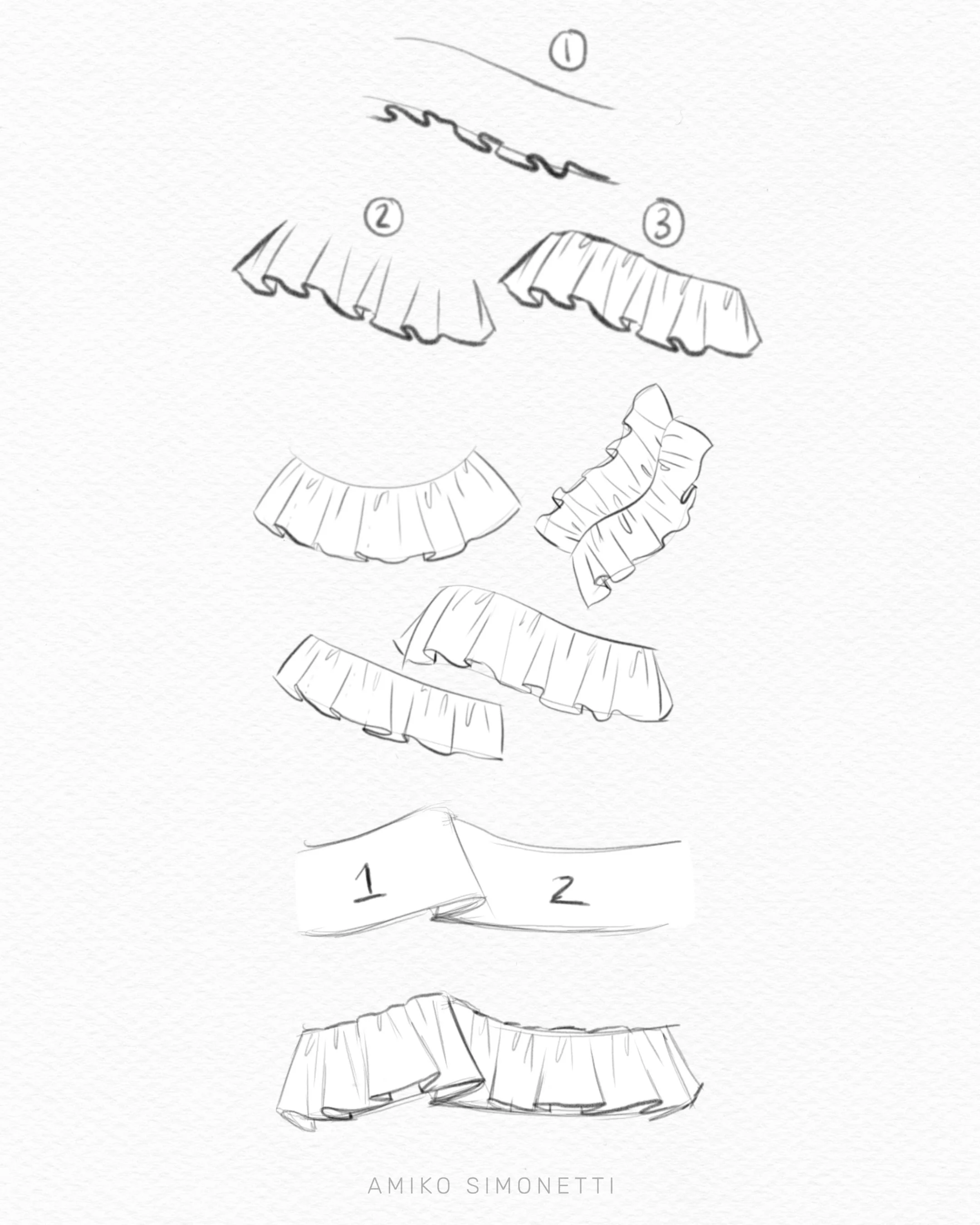
All ruffles can be drawn in 3 basic steps:
✅ Step 1
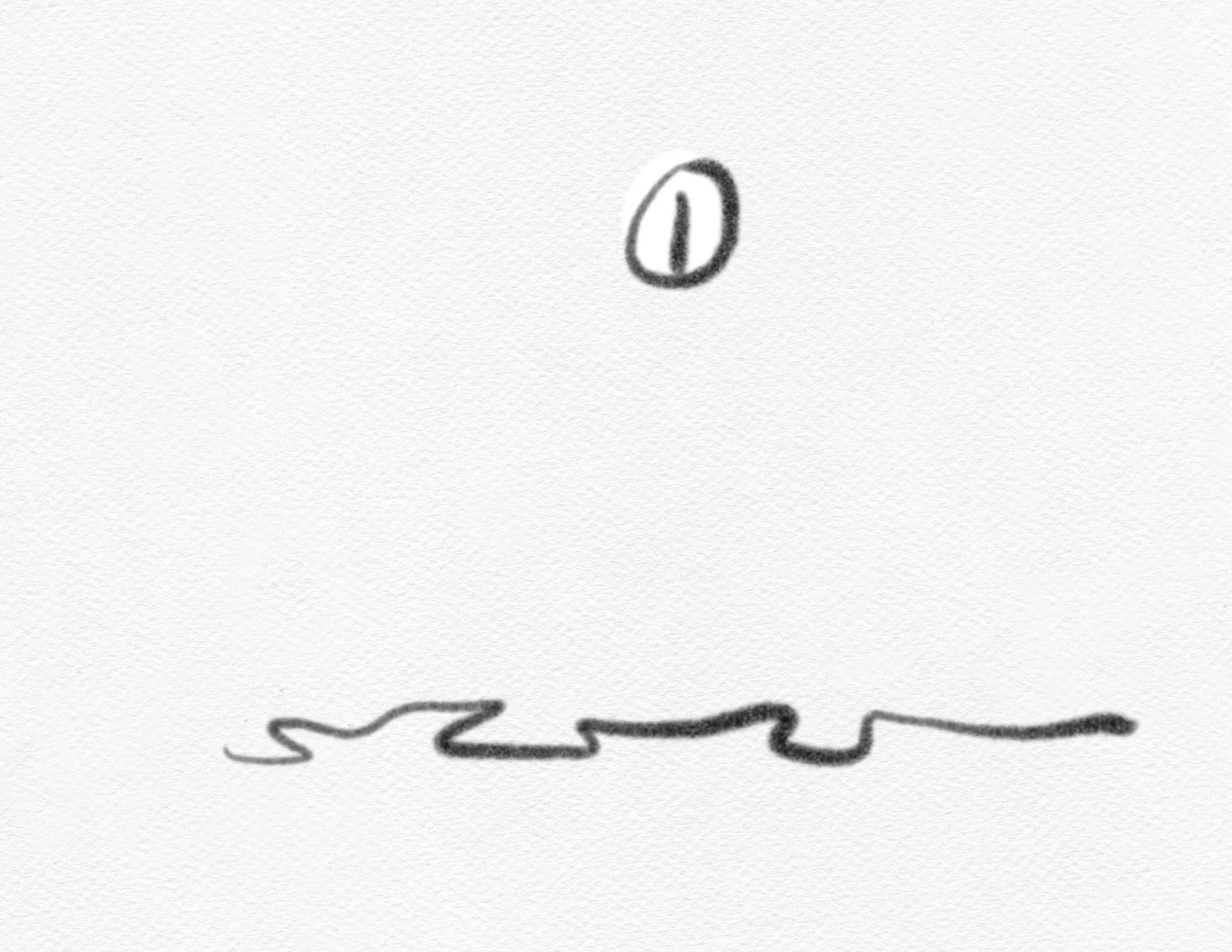
Draw a squiggly line for the ruffle hem.
Draw a wavier line for more fullness and a straighter line for more subtle gathering.
✅ Step 2
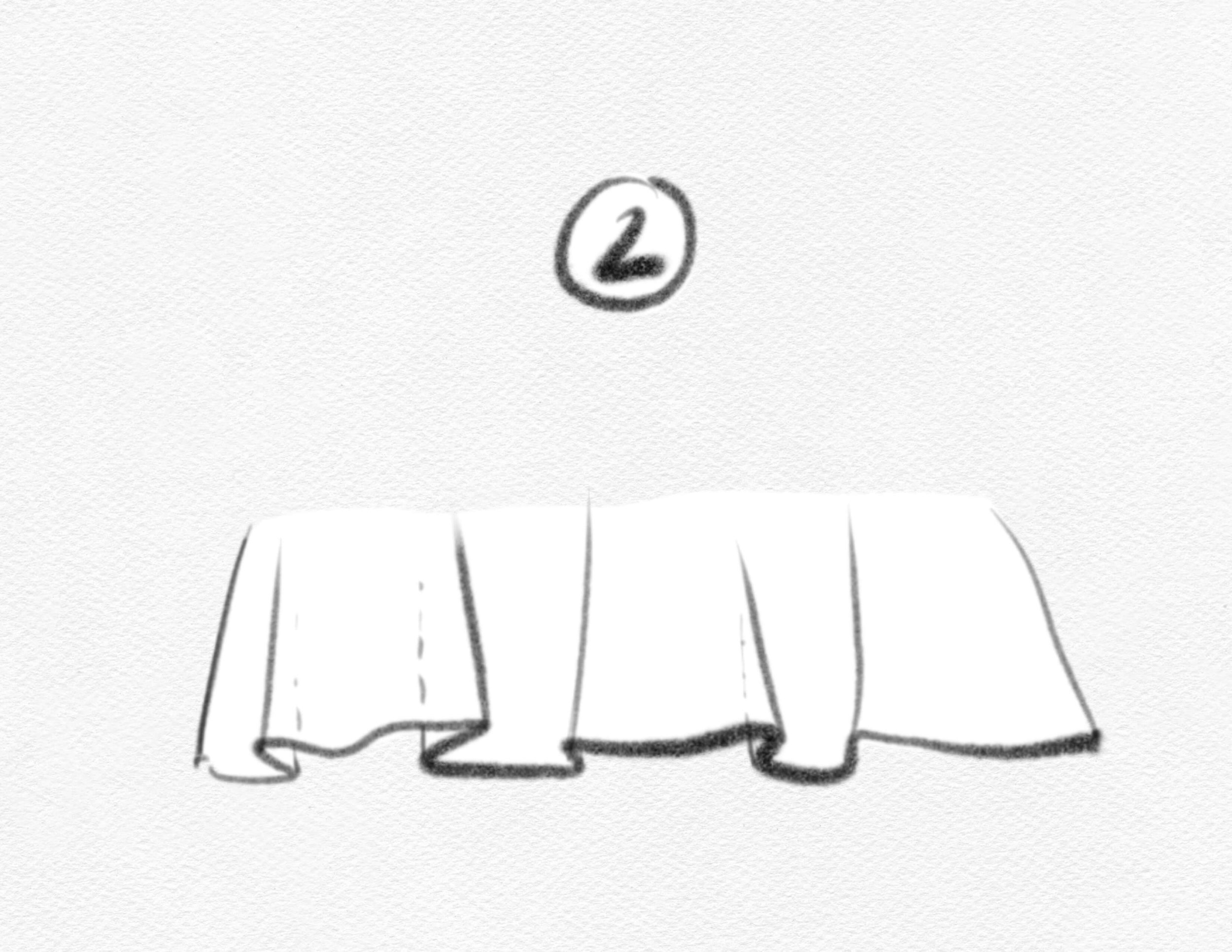
Draw drag lines. Connect the peaks and valleys from the hem towards the seam. Then draw the back of the ruffle. (We’ll revisit this in more detail later)
✅ Step 3
Draw the top of the seam, then add gathering lines.
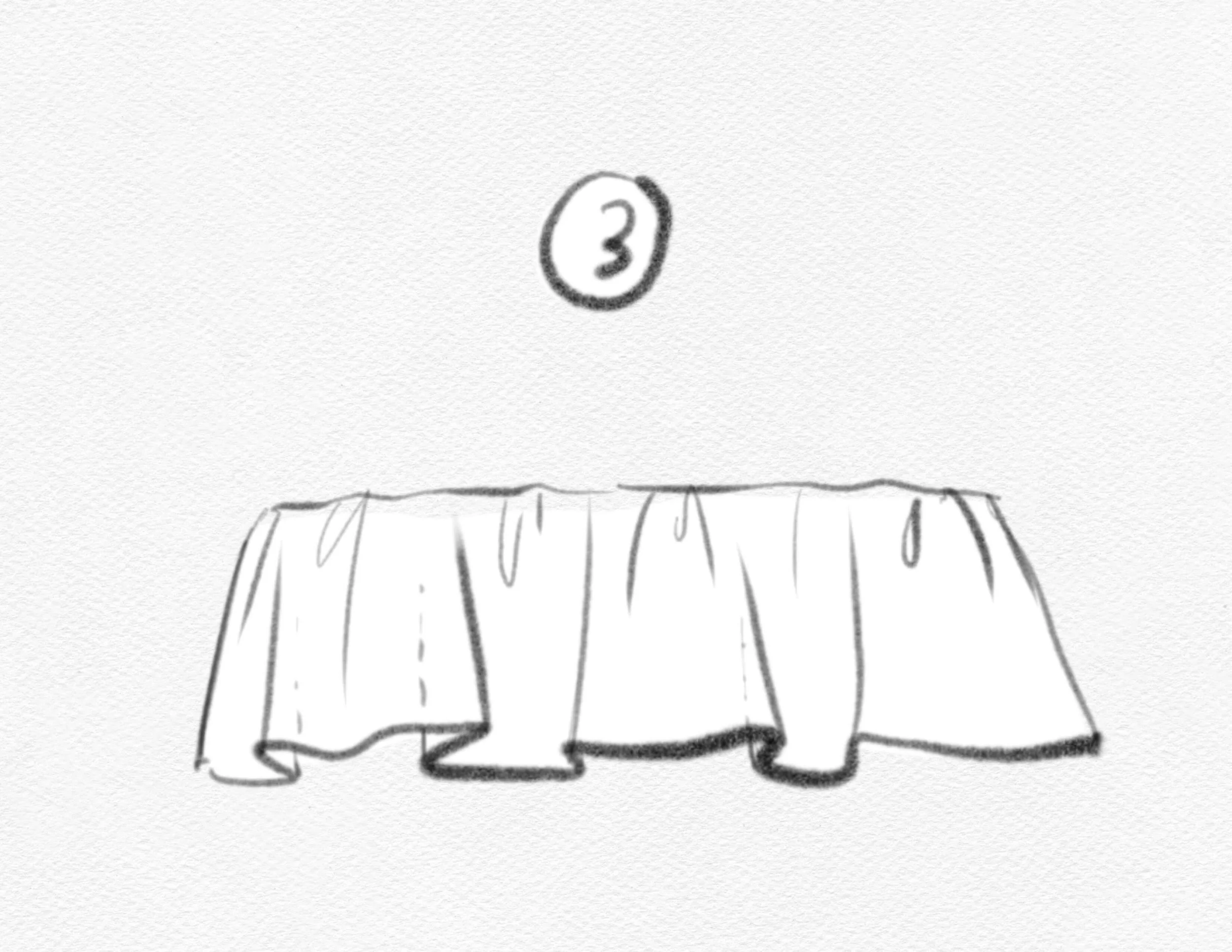
Tips for drawing natural (not stiff) ruffles
👉🏼 Tip 1: Beginner’s draw ruffles with symmetrical or repetitive lines. Which is a great way to learn, but it can look a little stiff. Later in this tutorial we’ll practice drawing advanced ruffles that have an organic and natural look.
👉🏼 Tip 2: Avoid drawing parallel drag lines, they should converge, more like a cone.
When drawing the backside of the ruffle, make lines parallel to the top seam, otherwise it will look unnatural.
👉🏼 Tip 3: When drawing gathers, use a variety of shapes and make them look kind of random and not too straight or even. Natural ruffles are more organic and irregular.
There a few more really great tips for make ruffles look natural, but let's build some more skills first, and save that for the end.
Part 2: Drawing Practice
Shape Practice
This next section is for practicing basic to advanced ruffles.
Remember, the ruffle looks complicated but it’s only a few simple shapes. Let’s practice these shapes now.
Do this with me, or follow along. You can do this, it’s as easy as doodling.
Draw the following:
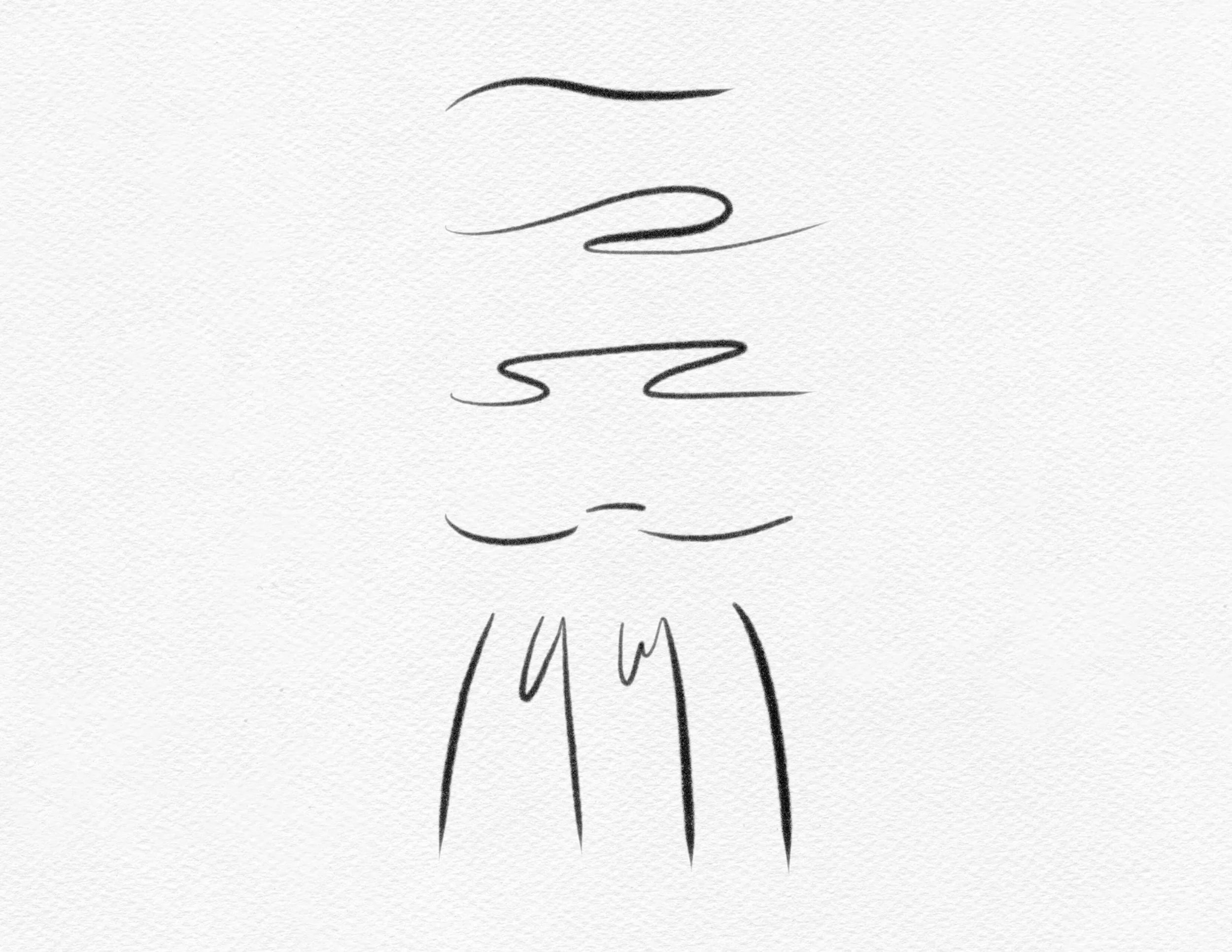
Wavy line
Single wave
Double wave
Segmented curved border
Gathering
Feel free to practice this exercise a few times.
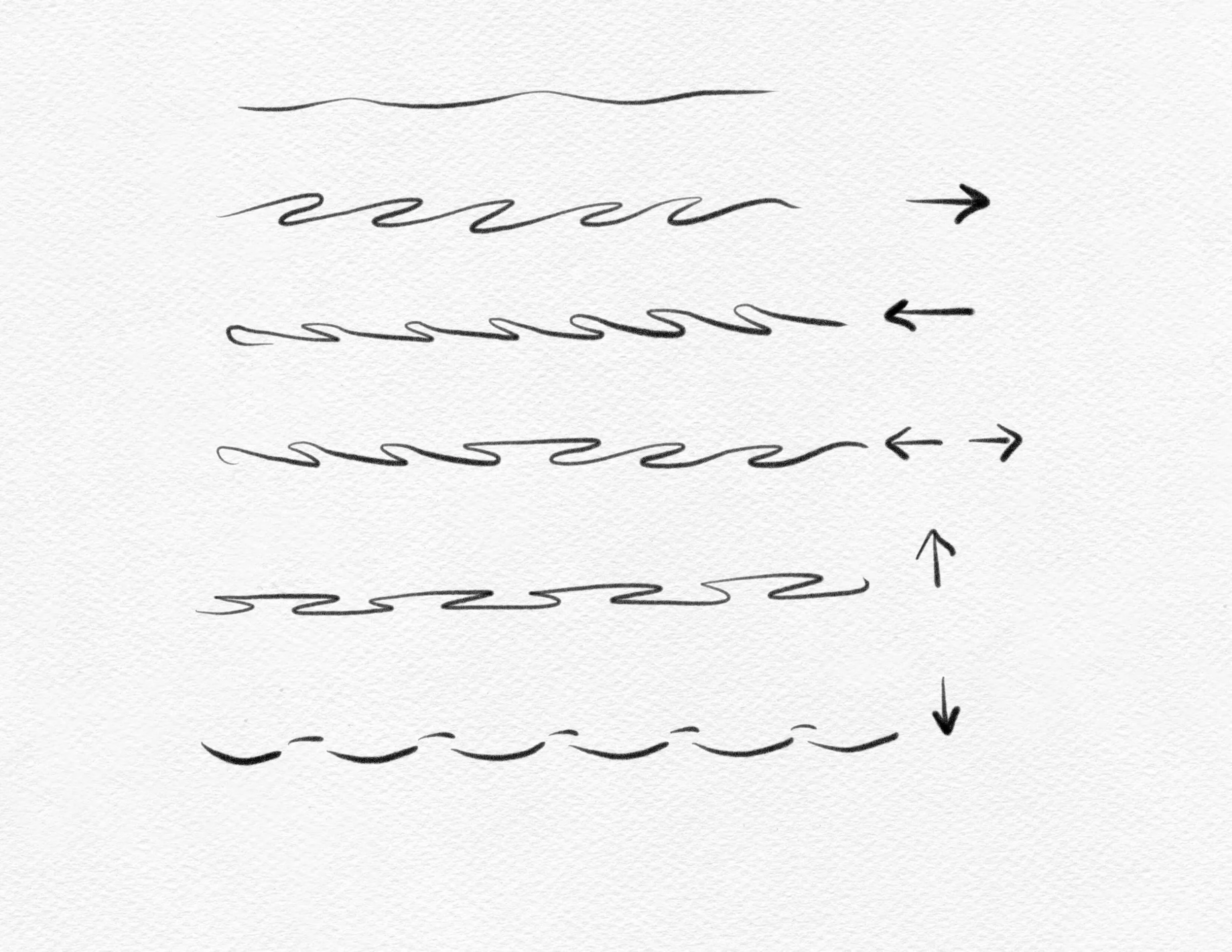
Line Practice
Now that we’ve practiced drawing the shapes the compose ruffles, let’s repeat those shapes into lines. I doodled lines like these in class. It's kind of like addicting and soothing in a weird way.
Practice drawing the following:
Wavy line
Wave in one direction
Wave in reverse direction
Wave in both directions
Double wave
Segmented curved border
Practice drawing these lines slowly. One day soon it will become second nature.
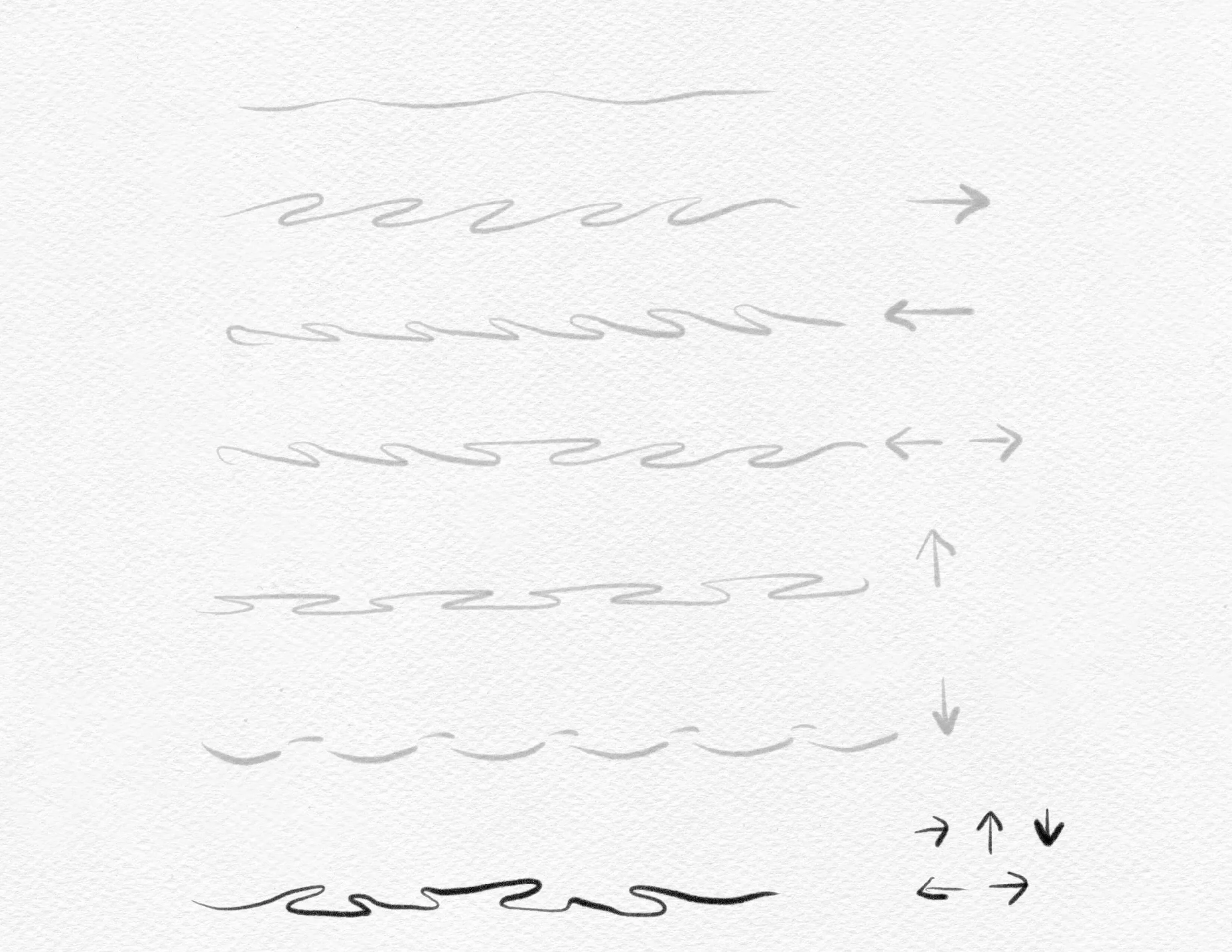
These lines all represent the ruffle hem from different perspectives (the side, top, and bottom.)
The previous exercise builds skills for the next “advanced” hem line, which combines all of these perspectives. It’s a free-flow creative line that will become more intuitive after practicing the other lines.
Finish the Ruffle
Remember the first 3 steps from the beginning ? We just completed
✅ Step 1: Drawing the ruffle hem in varying fullness and perspectives.
Let’s add detail to bring these ruffles to life.
✅ Step 2: Define the ruffle cones by extending converging lines toward the top. Also draw the underside of the ruffle.
✅ Step 3: Draw the top seam and gathering.
Repeat this process for each line in the series. This is repetitive, but that’s the best way to build muscle memory.
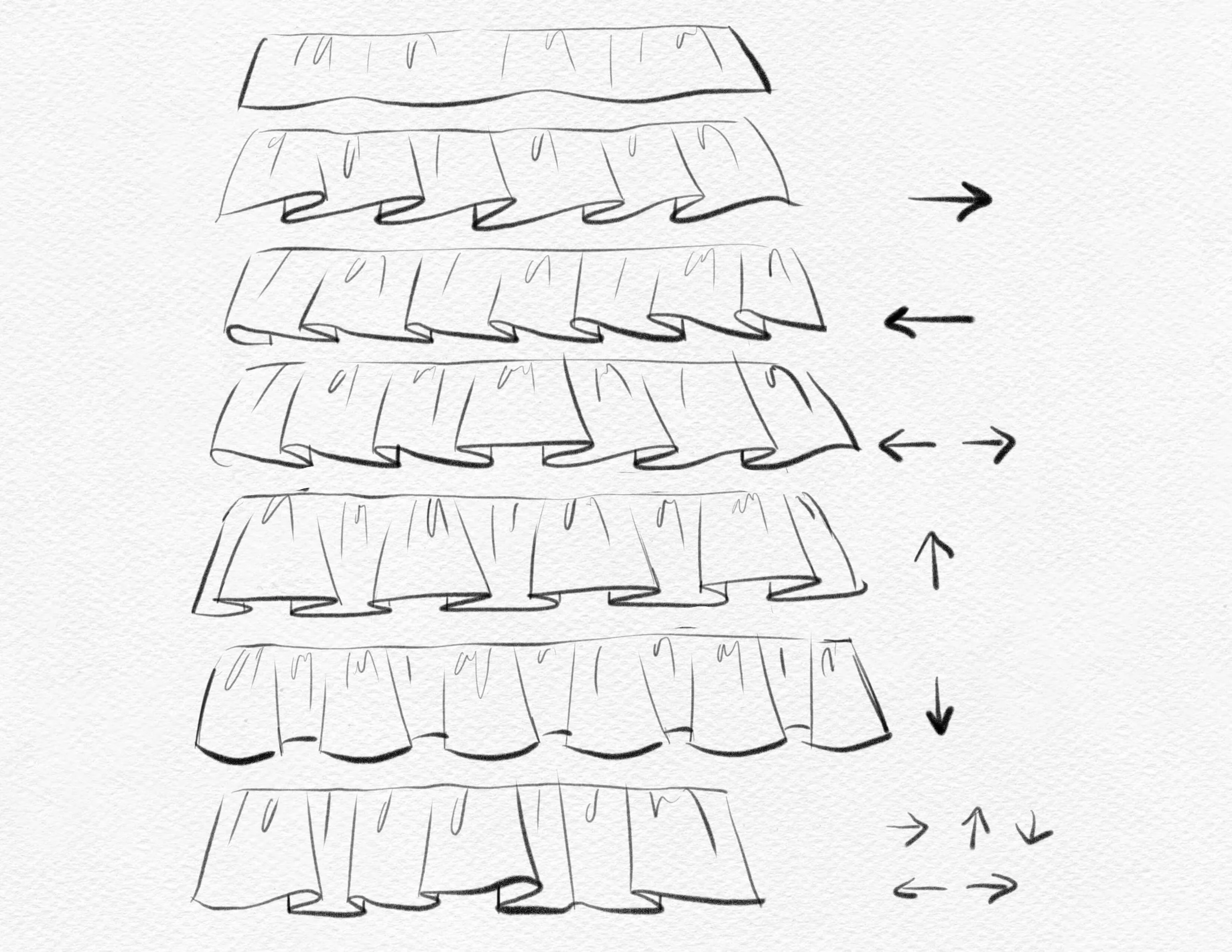
The more practice, the easier it will become to draw an organic ruffle incorporating many perspectives and variations. Drawing ruffles like this gets more intuitive over time,
Part 3: Drape + Movement
Fabric
To draw realistic ruffles, consider your designs fabric. Fabric quality will affect how a ruffle drapes. I’ll show a progression from stiff to drapey ruffles.
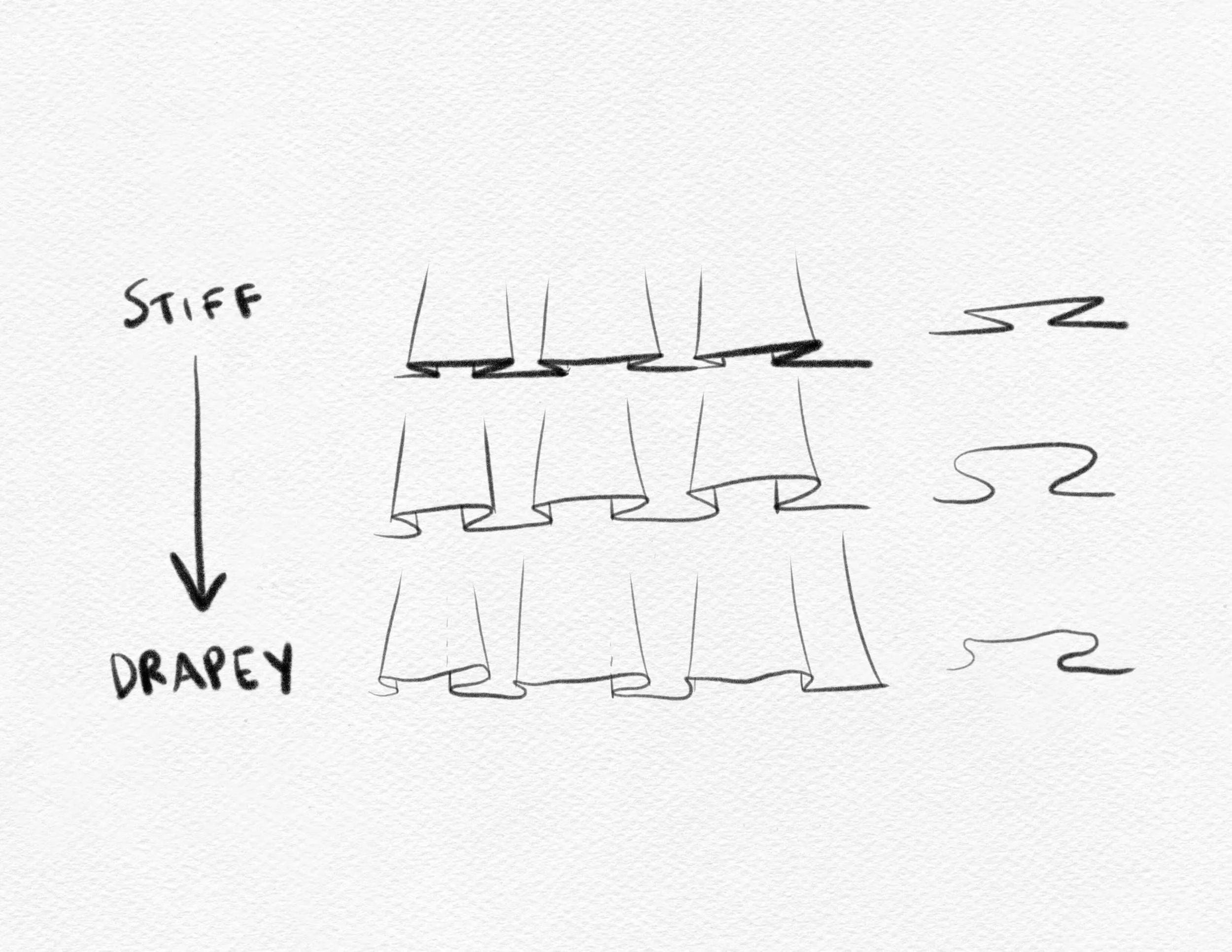
Stiff fabric (taffeta, starched cotton) holds a defined, almost geometric wave — the peaks are sharp and intentional.
The more drapey the fabric, the more soft and rounded the waves will be.
Light or fluid fabrics like silk chiffon and jersey, will have soft waves with more jitter. These fabrics don’t have enough structure to hold their shape, so they collapse and create secondary ruffles.
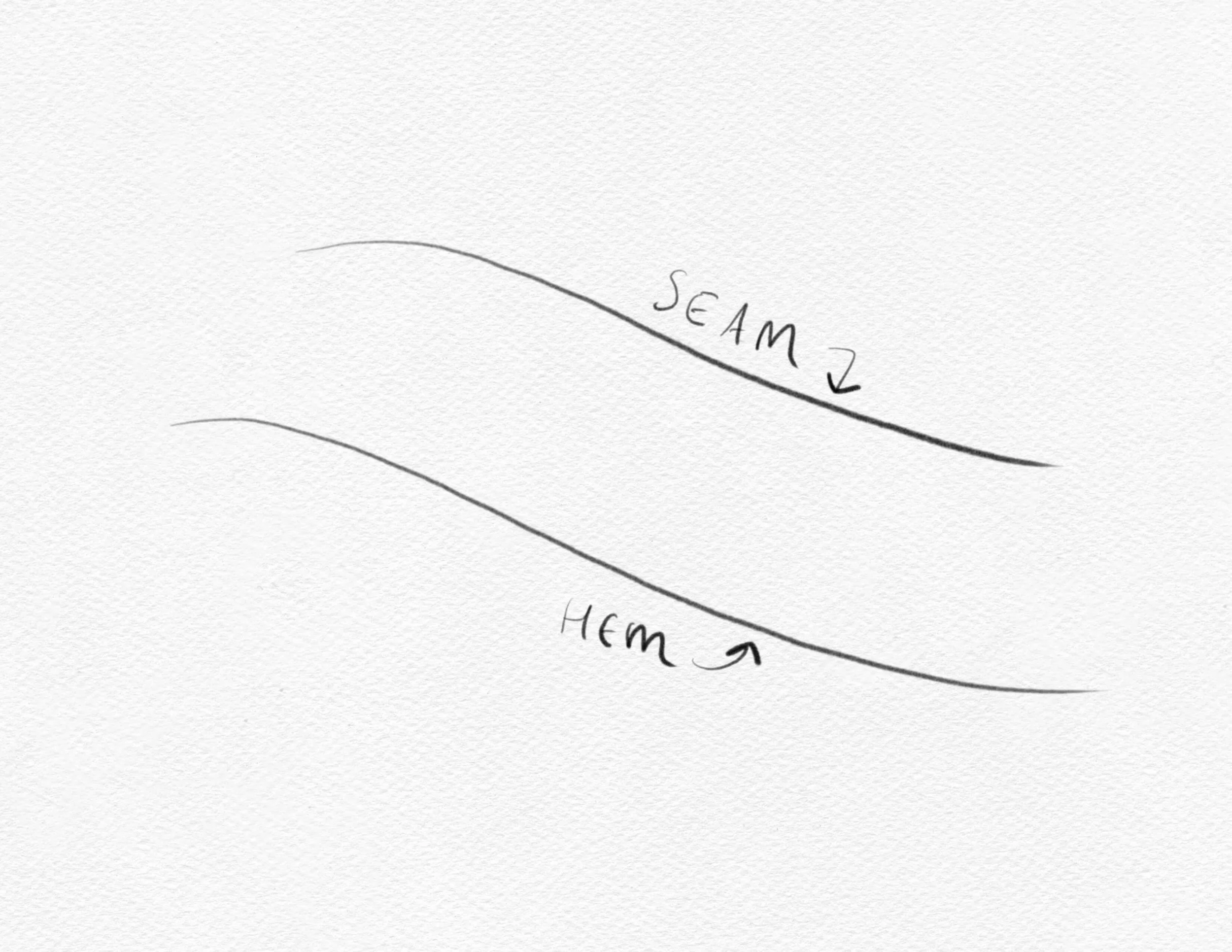
Seam
Seam direction controls how a ruffle moves through space. For example, curved seams like neckline cause ruffles to bend.
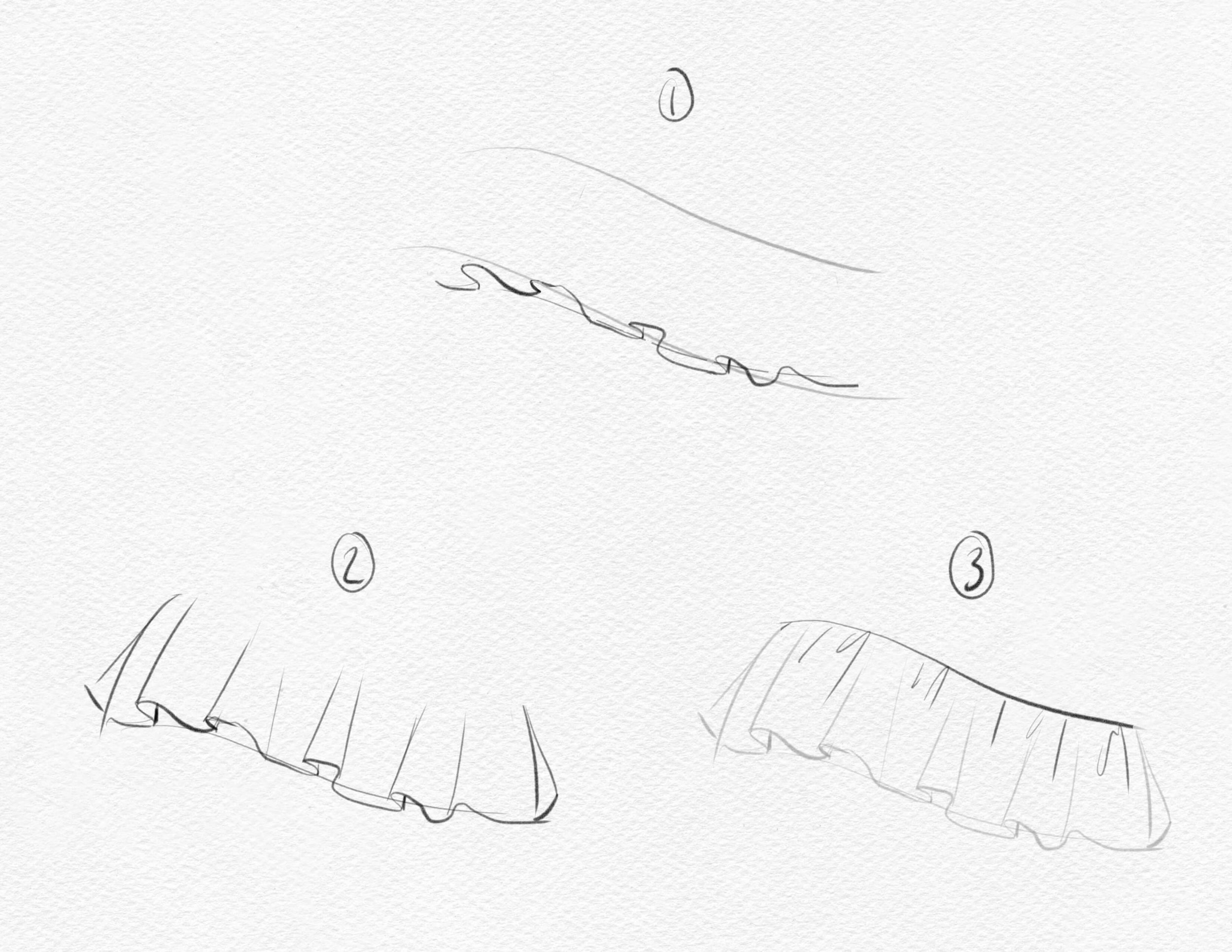
⚠️ The key is to first draw a guideline for the hem of the ruffle that follows the seam direction.
Then apply the same 3 basic steps:
✅ Step 1: Draw a squiggly line
✅ Step 2: Draw converging drag lines and the ruffle’s backside
✅ Step 3: Add the seam and gathering lines
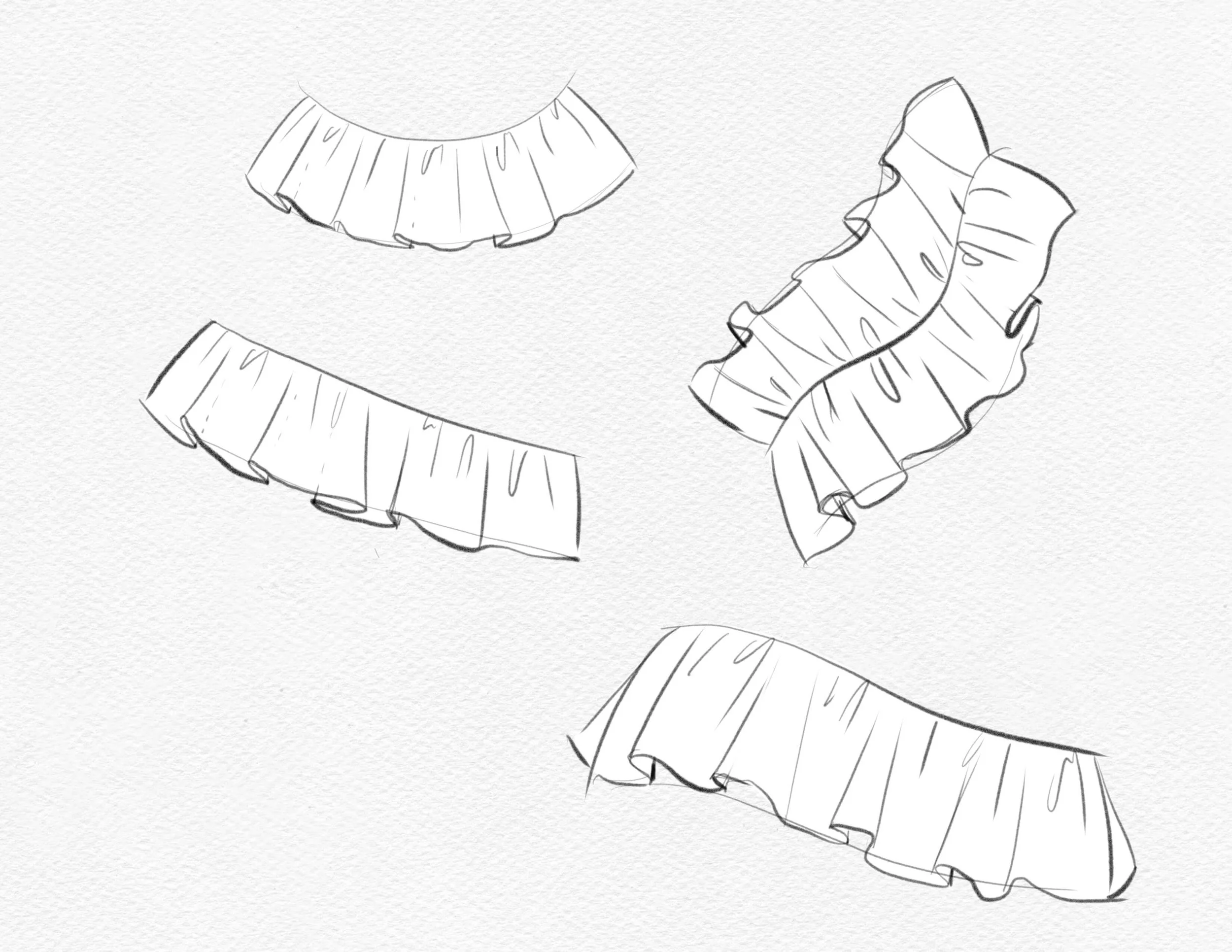
For more practice, draw ruffles in the following ways:
Curved seams
Diagonal seams
Double edge ruffle
Conclusion
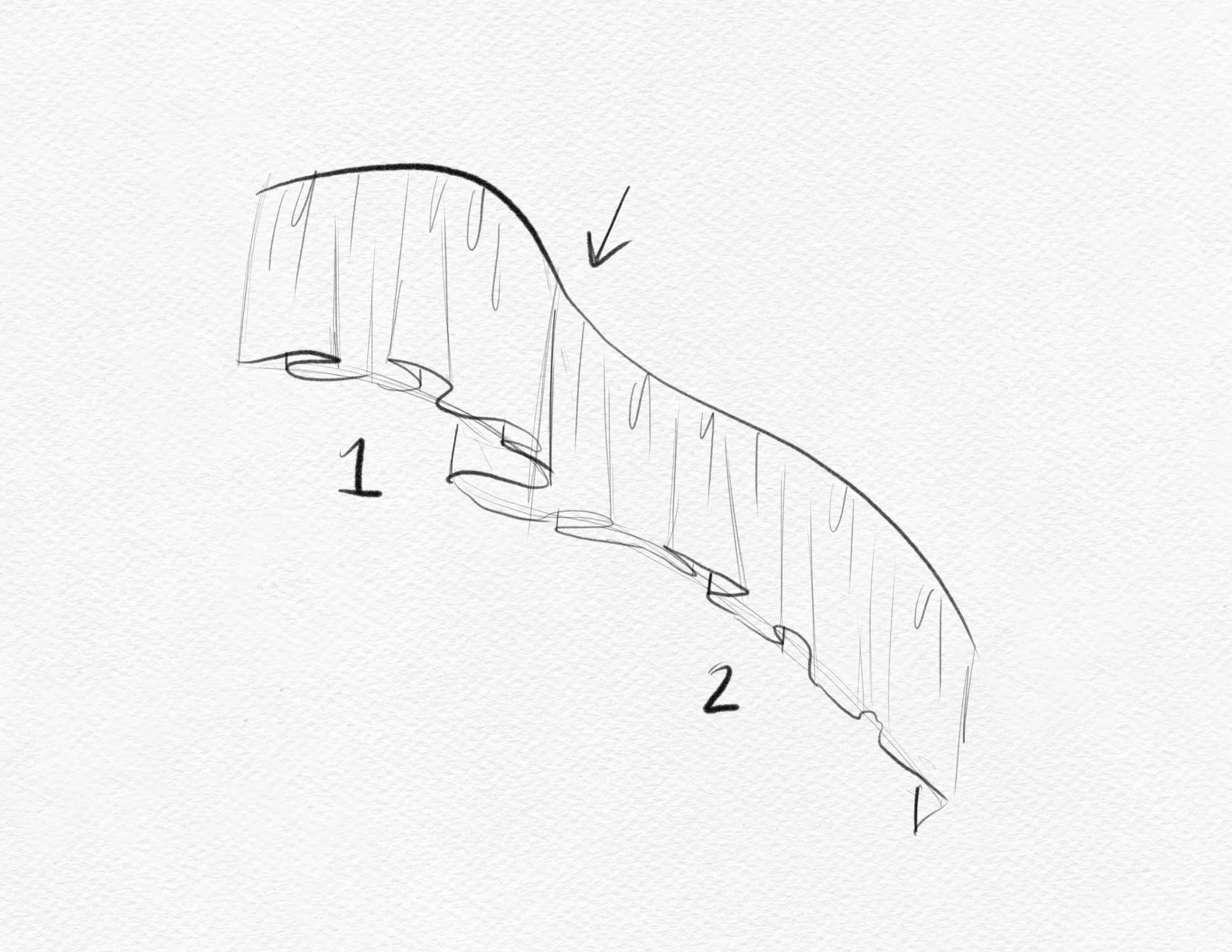
One last tip: when drawing ruffles with complex curves, look for compression points where the ruffle folds in on itself. These points naturally divide the ruffle into sections.
Instead of trying to draw the entire ruffle at once, break it into smaller sections and draw each section individually. This makes complex ruffles feel much easier and less overwhelming.
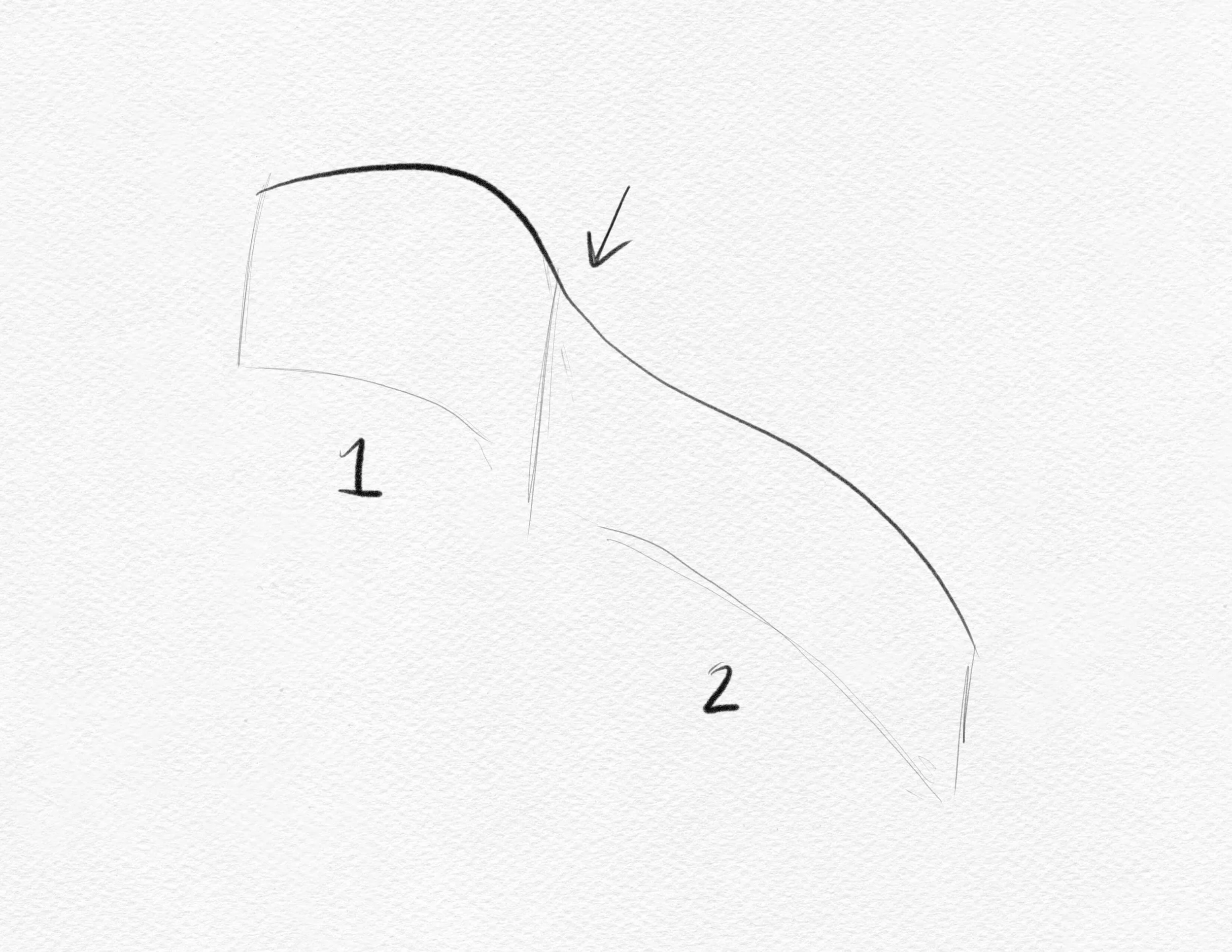
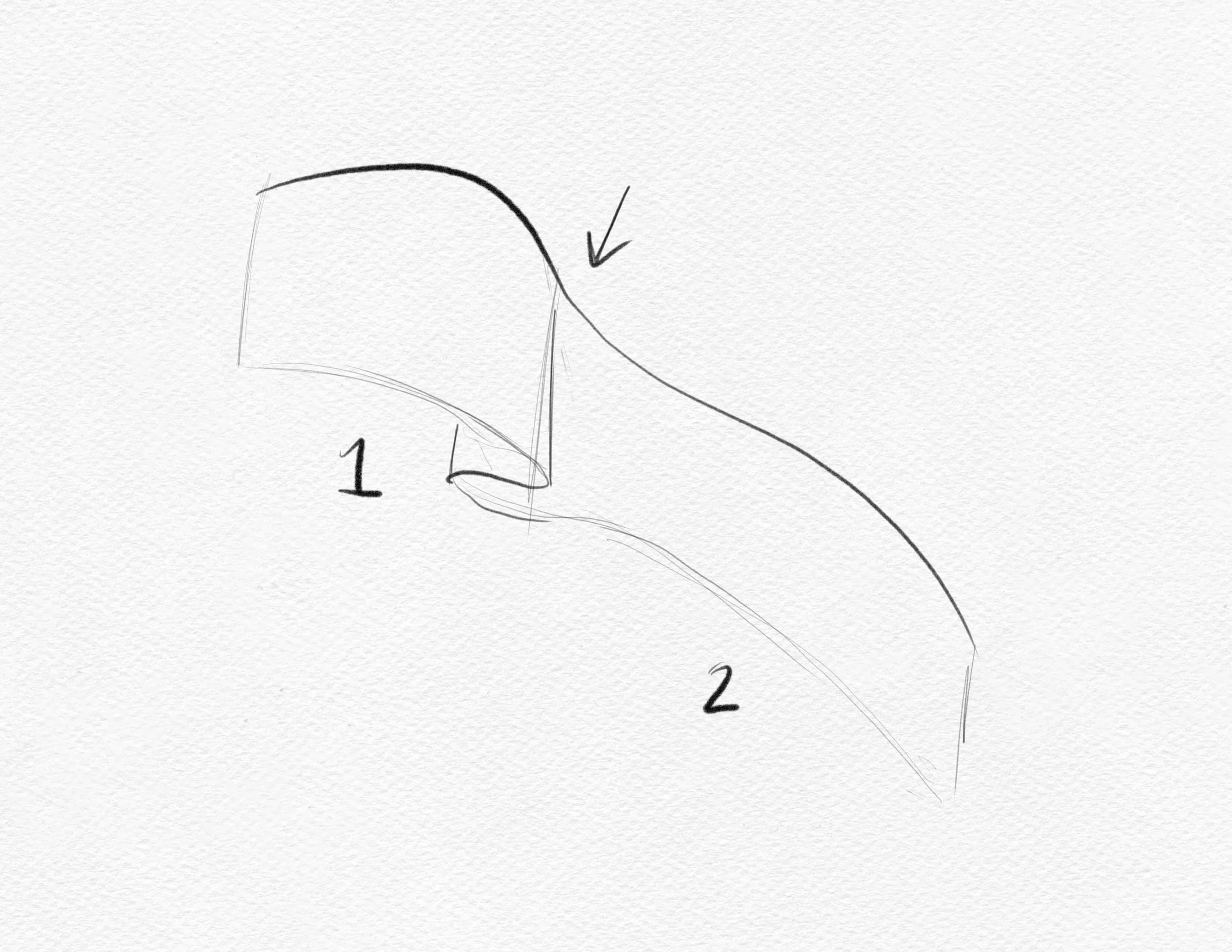
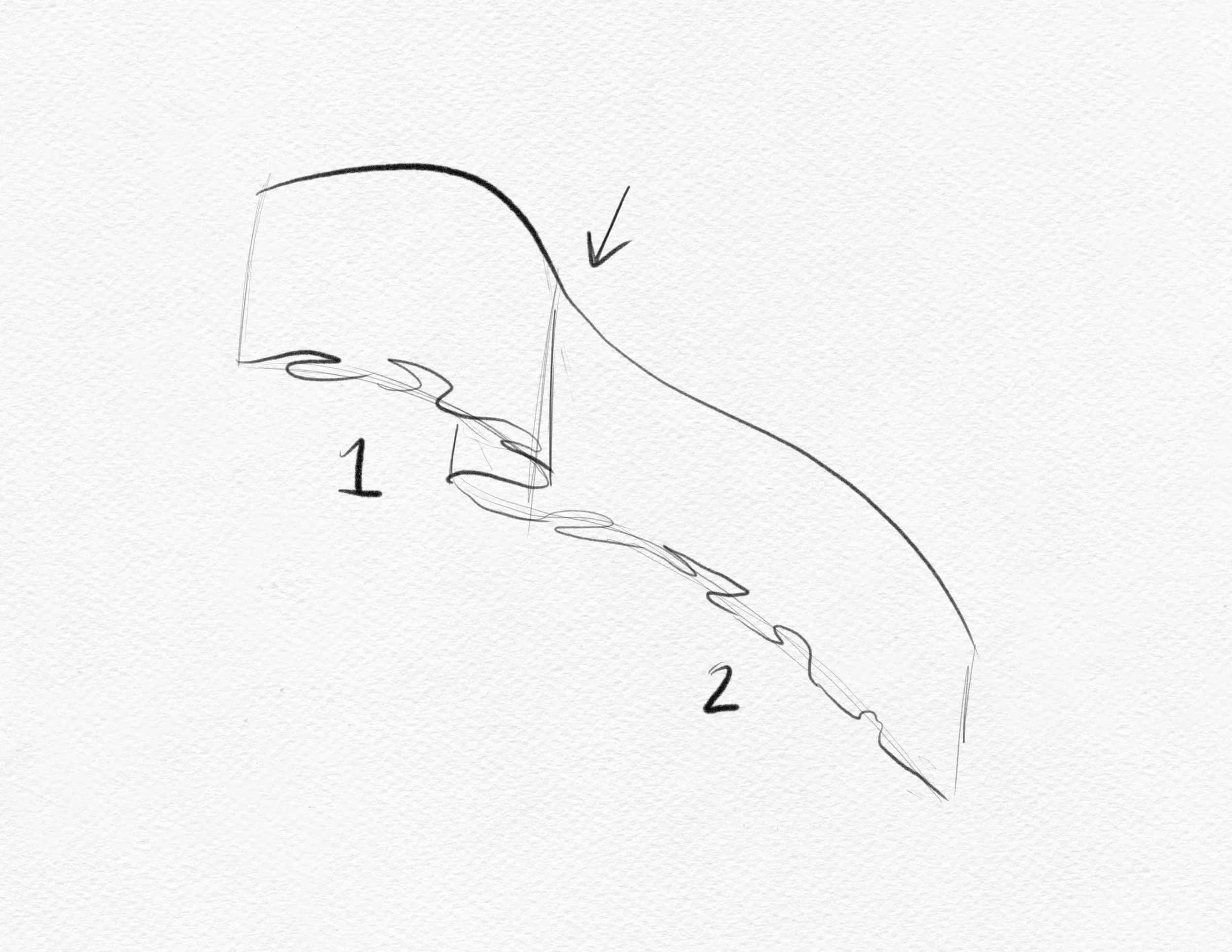
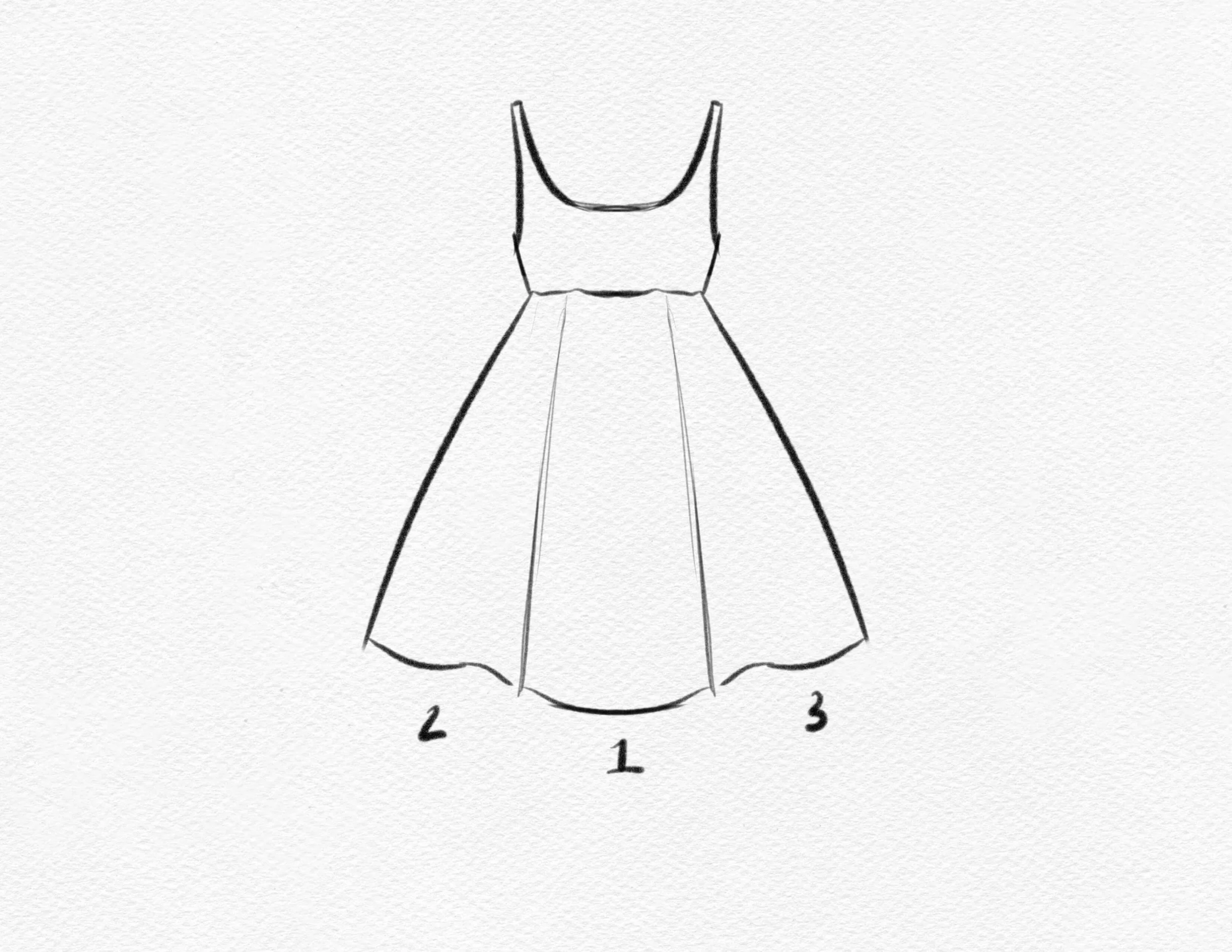
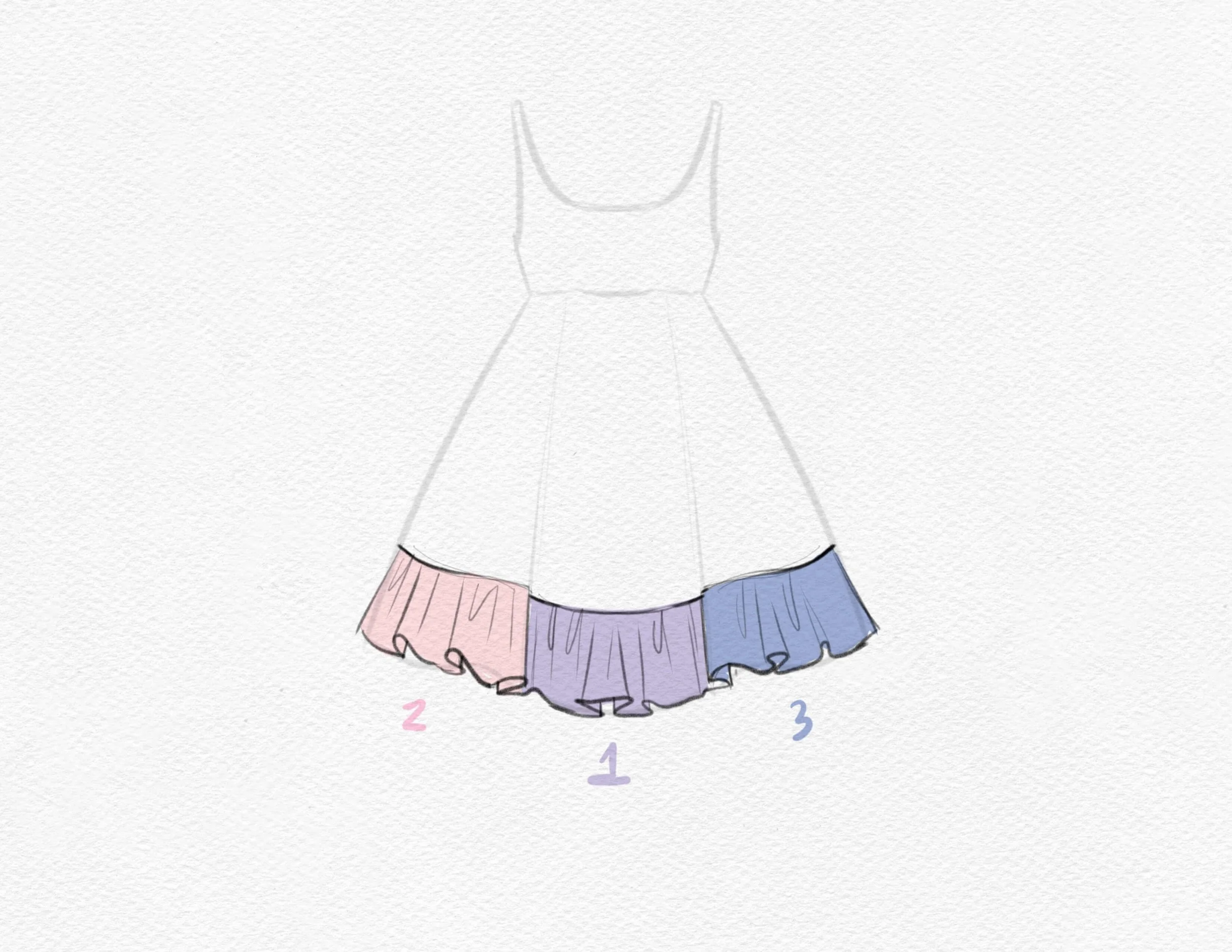
Here’s another example. Let’s pretend this is a flared dress. You can visually divide the shape into 3 sections. Creating ruffles within each section helps simplify the form and creates a more natural flow.
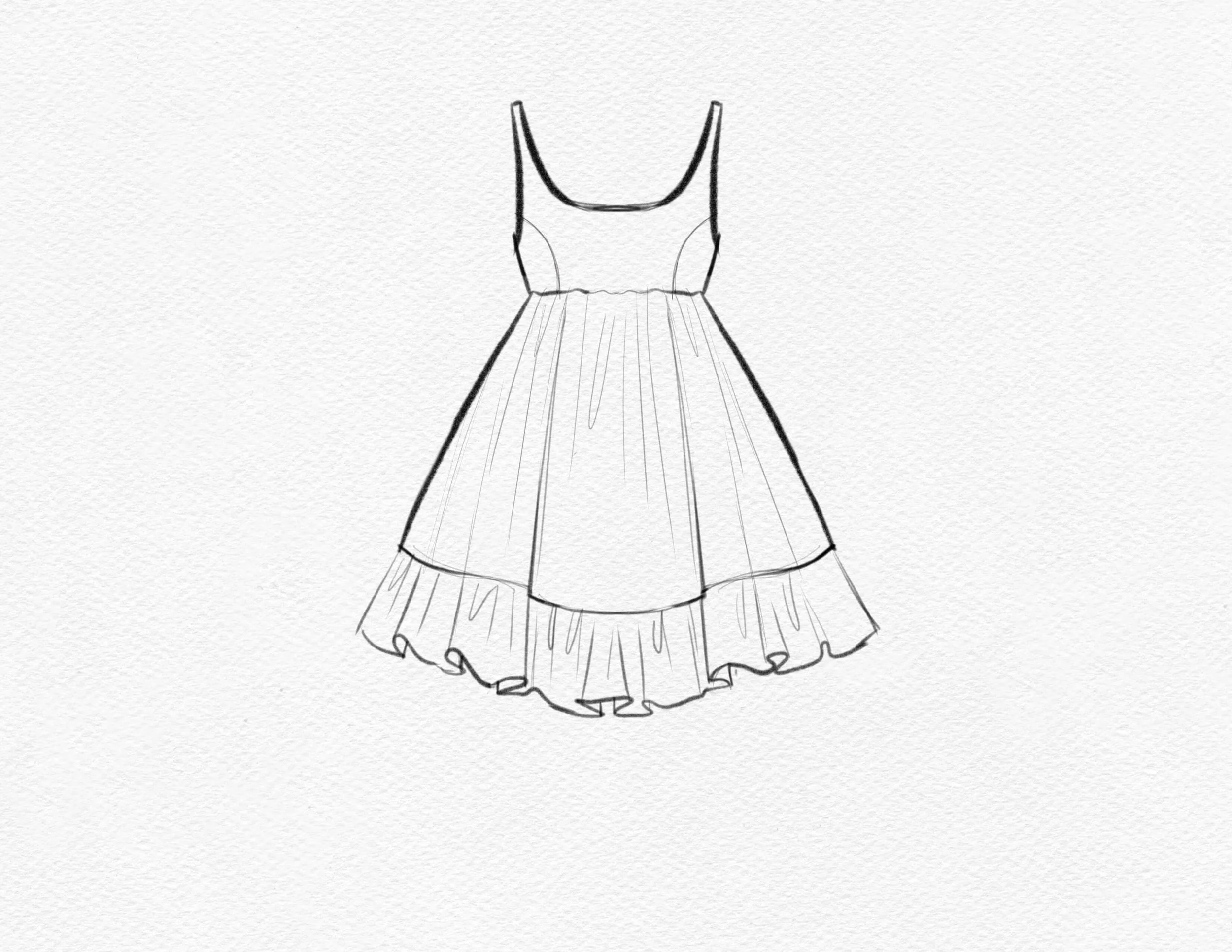
We’ve reached the end of this tutorial, but I want to leave you with one more observation: the following example is not a ruffle. It’s a flounce.
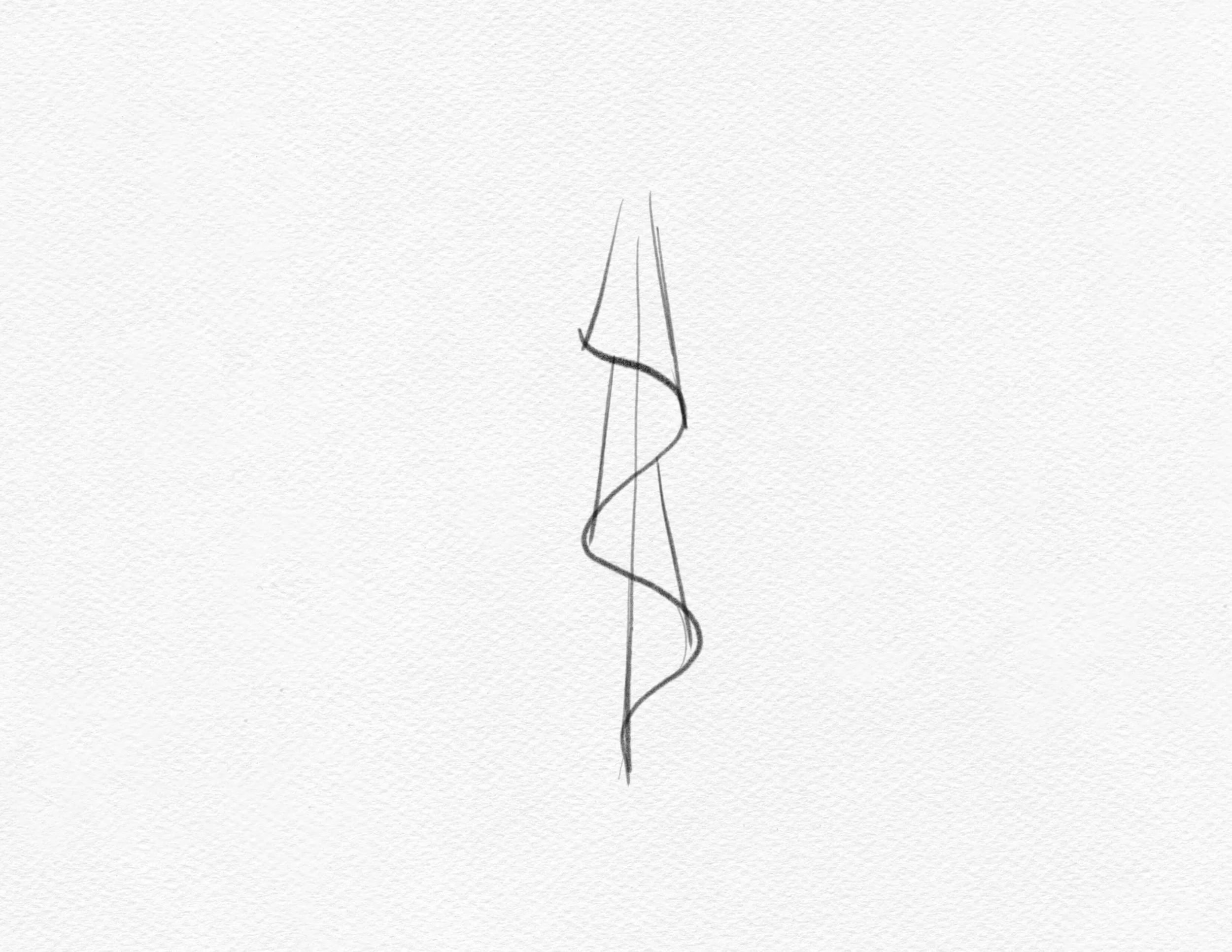
A flounce is constructed differently and drapes in a different way, but that’s a topic for another video.
Thank you so much for reading, and I hope to see you soon.
xoxo,
Amiko